
What AI Costs?

With the frantic clambering and desperation of the AI race comes a win-at-all-costs mentality.
The literal pouring of money into the problem is indicative of the desperation.
Benedict Evans In his always stunning bi-annual presentation made this point staggeringly clear with this slide in his latest deck.
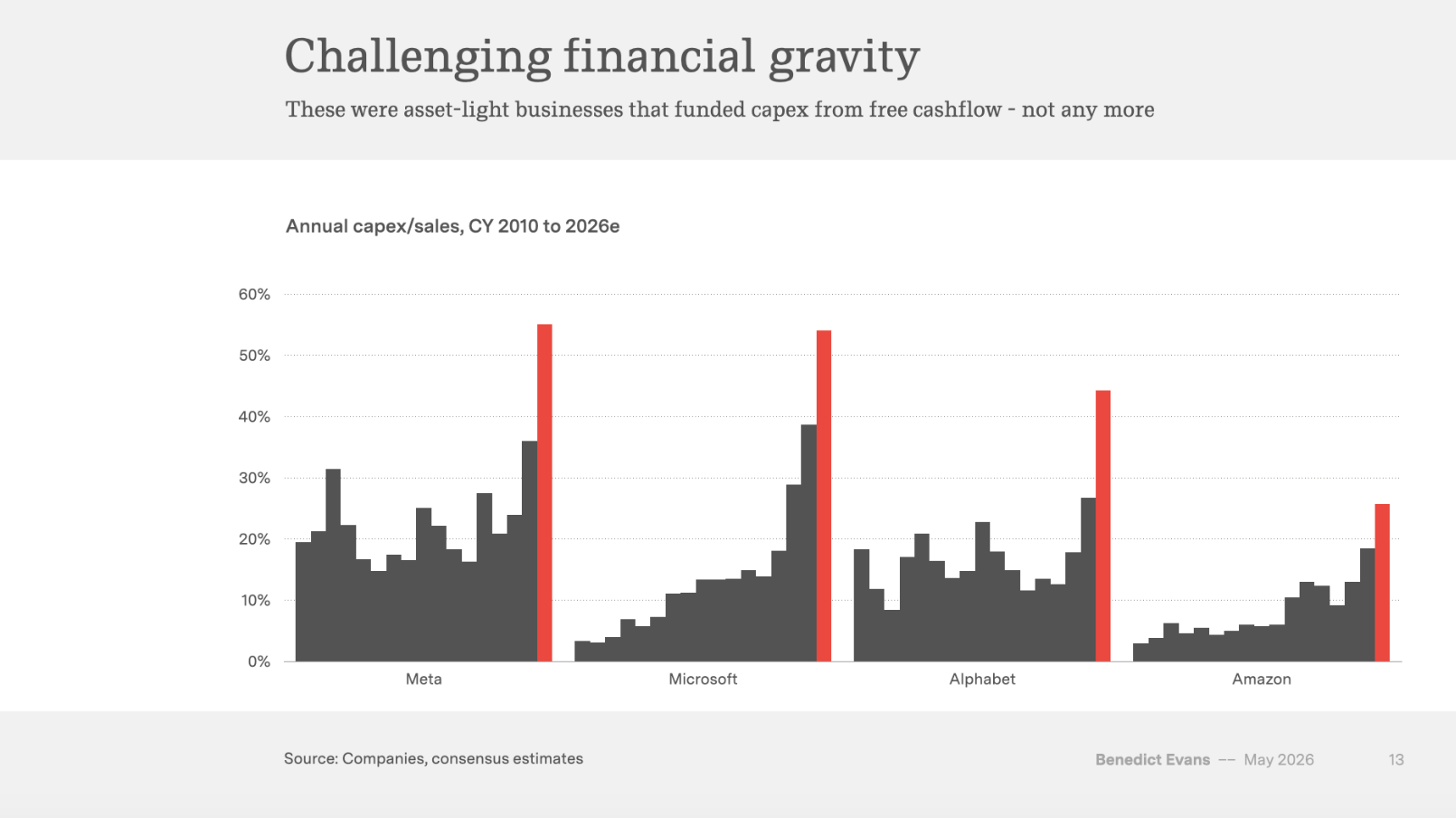
This explosion comes with additional costs placed upon resources, energy, and the environment that do not always get fully accounted for, and while we are seeing some pushback on the construction of data centers by local communities, the sheer scale of the impact is not being fully discussed or disclosed.
In 2018, Kate Crawford embarked on a project to uncover what it took for Amazon’s Alexa to answer people’s questions. The $99 device was the front end of a massive system of people, computing power, and natural resources, all of which were in service of getting your question answered.
This project, called “The Anatomy of an AI System,” is the most incredible piece of investigative journalism paired with information design. Importantly, I am not the only one who recognized it; this work is in MOMA’s permanent collection and has been shown at the Fondazione Prada in Milan.
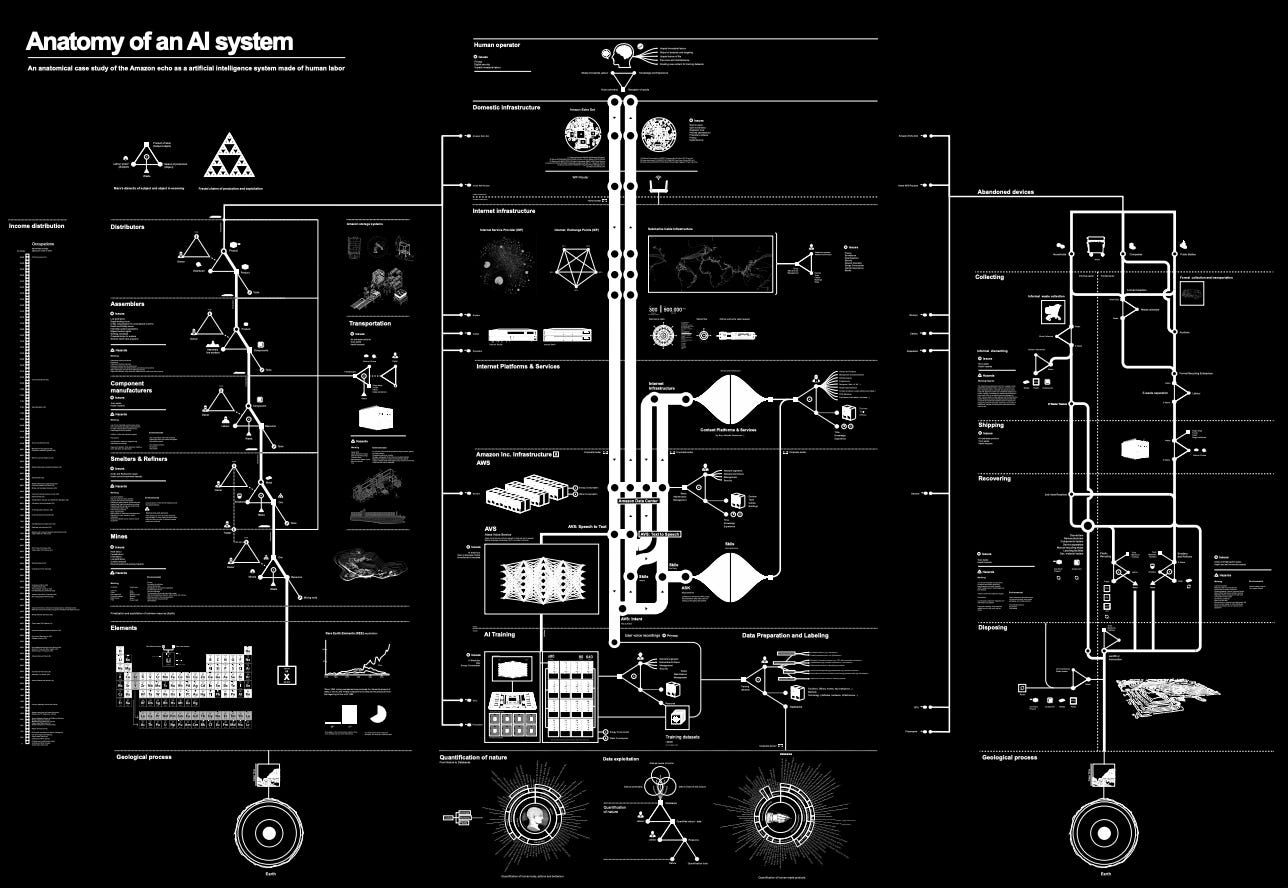
This is now 8 years old, and the world has moved on, and the Amazon Echo, which Kate examined in such rich detail, is now a historical artifact.
The object of the moment is the Nvidia Blackwell rack system.
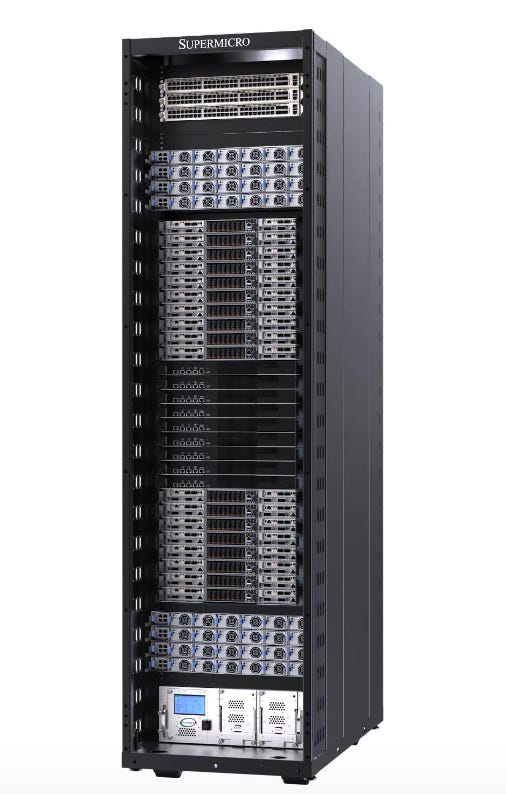
This is the powerful, state-of-the-art, multi-million-dollar machine that is at the heart of what’s powering the AI revolution.
There are tens of thousands of these machines out there in the world, and there will be tens of thousands more coming online.
As Nvidia reported in its Q1 2027 results on May 20th, 2026.
“Blackwell adopted and deployed by every major hyperscaler, every cloud provider, and every model builder.”
Someone will and is probably doing the detailed exercise to understand the cost of these machines and doing a way better job than I, but I thought I would give it a try.
Putting AI against itself and searching hundreds of sources, I attempted to build a spreadsheet to look at costs through the single lens of the Nvidia system. It’s hard to do; no one is publishing this data, Nvidia has some disclosures on its website, and some academics have looked at the impact of similar systems.
So, what I have made is the opposite of Kate Crawford’s amazing infographics; instead, I made a spreadsheet where the numbers can be seen clearly in black and white with a trillion caveats.
It’s there to show, in hopefully understandable language and metrics, the cost and impact of one machine.
Scaling down the issue on purpose to make it more understandable.
The machine is a technological marvel and an example of how science can make things at the atomic scale, thanks to cutting-edge engineering and science.
Nothing less than the utmost precision, craft, and absolute perfection is what it takes to make machines like this. Machines that, in less than a second, can tell us the answer to our most burning questions.
The marvelous technology is where this all started, and it explains why so much money is going into it, but no one really wants to tell you the real cost, and when people show glasses of water as the water consumption cost of the average query, they get dismissed as inaccurate or out of date.
Case closed.
Anyway, here’s something to think about.
Good post. Thank you for unpacking this important issue. I am always a fan of the deep dive. Appreciate your hard work here, Ed.