The Grabbing Hands
An Industry Made From Failure

“The grabbing hands grab all they can
All for themselves - after all
The grabbing hands grab all they can
All for themselves - after all
It’s a competitive world.”
People are People-Depeche Mode- 1983
You spent years building other people’s brands.
Now it’s time to build your own.
You love Liquid Death.
You love your grandmother’s recipe for tomato sauce.
You wonder whether the strategic and creative acumen you sold by the hour could build something that makes you, and the people who depend on you, wealthy beyond reason.
Silly money.
But before you start dreaming, a few thoughts.
The first: you made good money as a toll collector for those brands.
So this is a guide about all those tolls, what they are, how to avoid paying them, and why the changing nature of the ad agency toll booth might be the very reason you’re thinking about tomato sauce in the first place.
What sounds like an empowerment story (be your own boss, build something real) is actually a industrial scale structure feeding off an 85% failure rate.
The failure rate isn’t a bug.
It’s a multi-billion-dollar business.
It’s the “Failure Industrial Complex”.
Because at every toll gate stands a hand, and every hand takes a cut of the cash you put in: your savings, your skin, your sleep.
The hand itself risks nothing.
No capital in the venture.
No stake in the outcome.
Paid whether you live or die.
Some of this is just the cost of being in business, and you’ll pay it gladly.
But a lot of it isn’t.
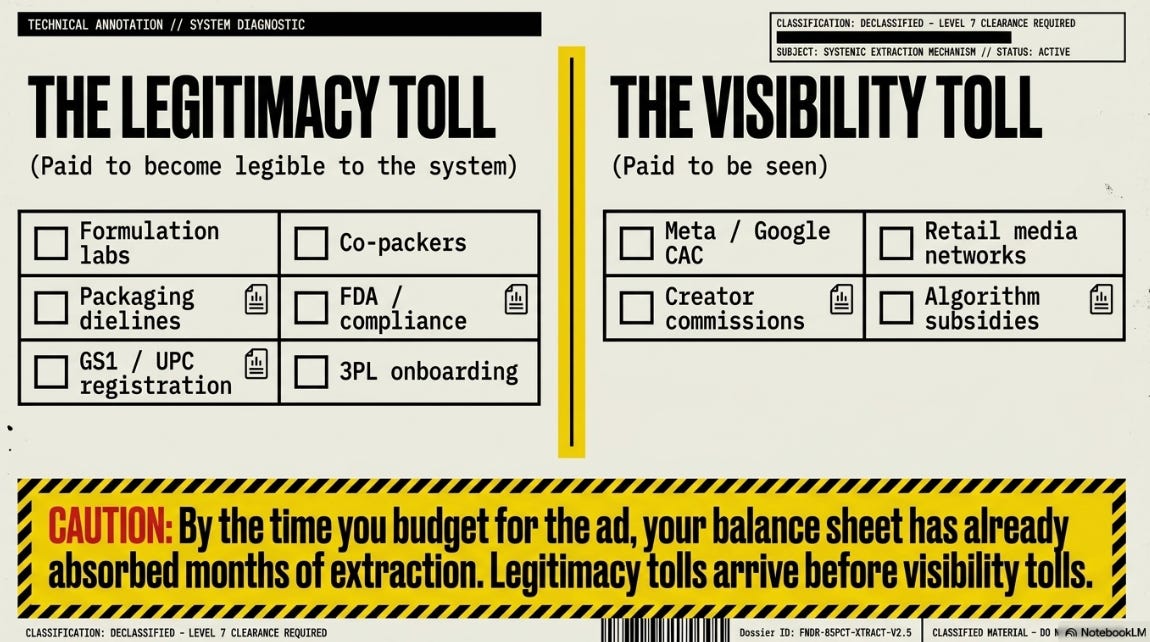
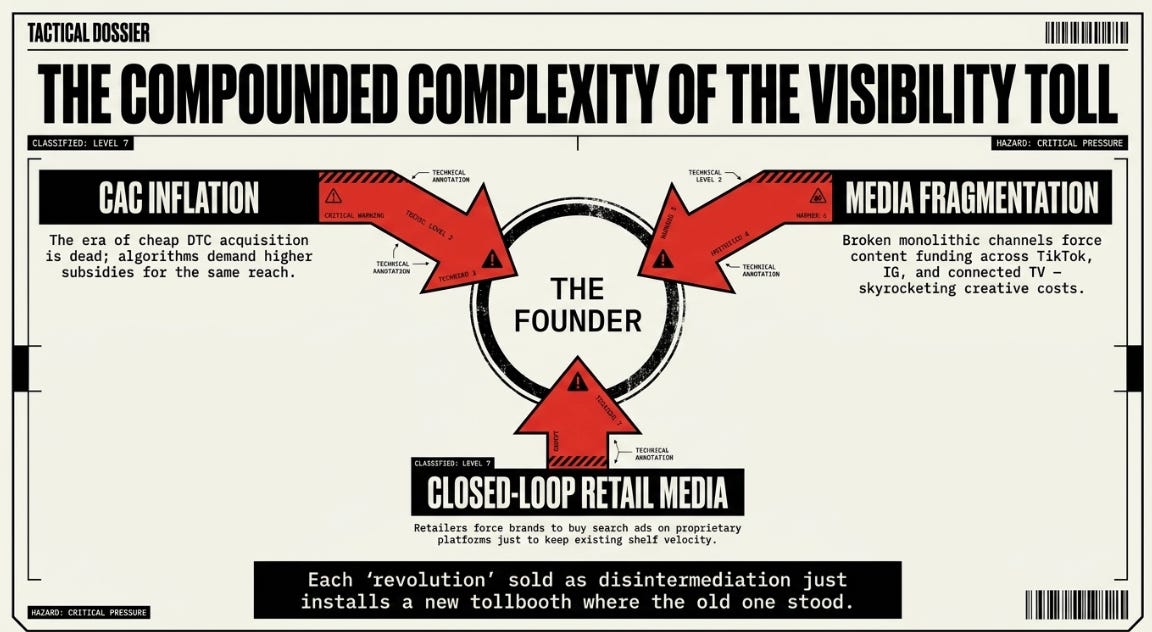
A lot of it is the cost of being seen.
Toll after toll, layer on layer, charged simply for the right to be found.
The visibility tools, one part of the toll ecosystem that’s expanded, fragmented, and compounded.
If you are going to survive, you must navigate The Ladder of Survival.
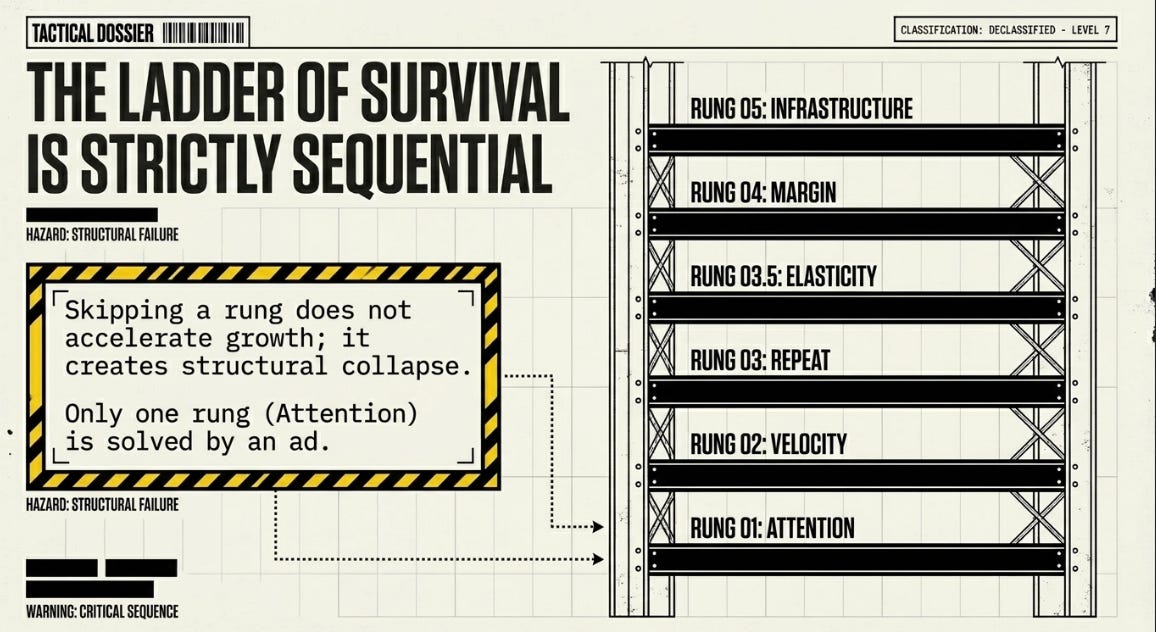
It’s strictly sequential.
Skipping a rung does not accelerate growth; it creates structural collapse.
Every rung has a different failure mode.
Think Before You Start
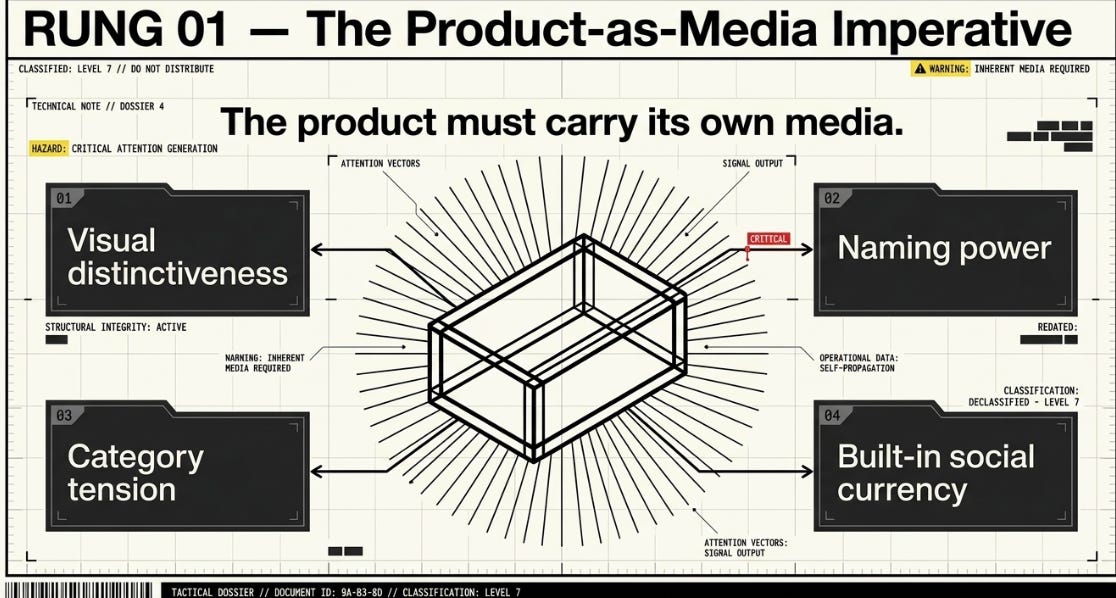
Know the category conventions.
Work hard to really break them, not just tweak them.
Packaging and naming are key; they create charisma, power, shelf presence, and disruption on their own, but they are not enough.
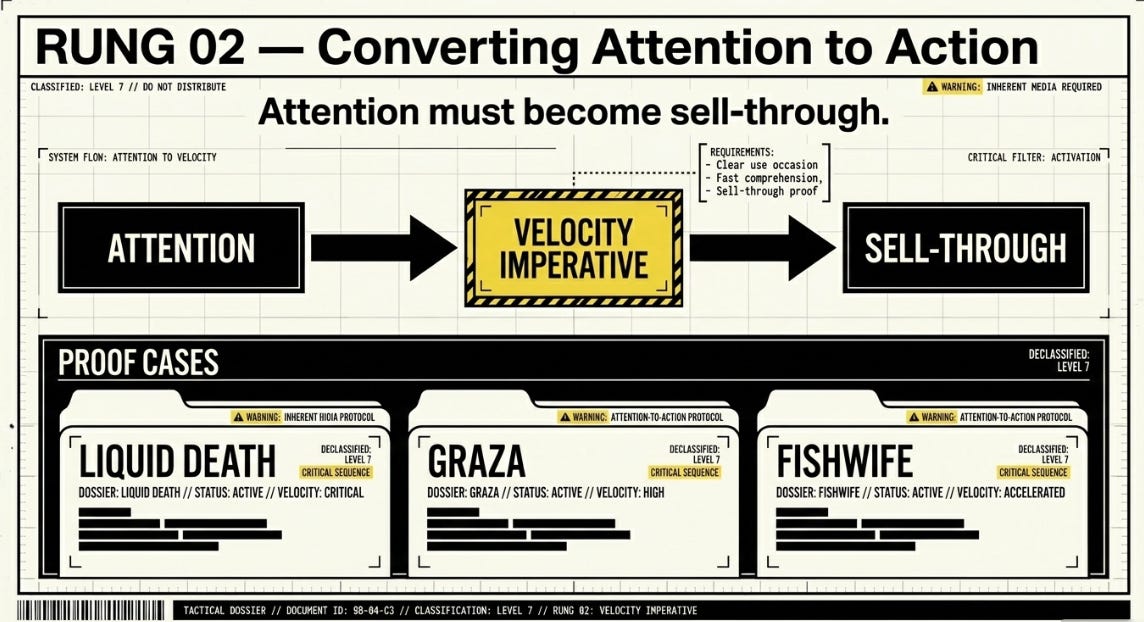
You need to know how to generate sell-through.
You need to know your consumer, know how they are going to use your product, and ensure they get you and know where you fit in their lives.
More new products than ever mean everyone in the ecosystem is excited and incentivized by the new, which makes shelves and lives more interesting, but also has become so ubiquitous that it makes loyalty tough.
What are you going to do to create, nurture, and retain loyal fans?
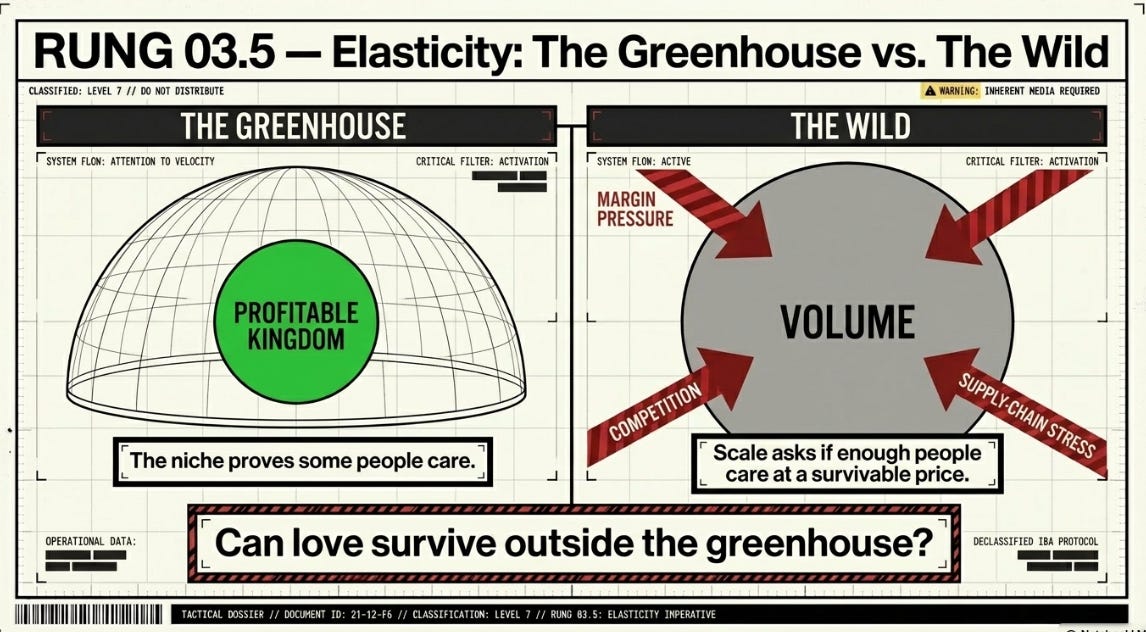
Then, going beyond this.
How do you feel about scale- is your idea a mass or a niche proposition?
Can you persuade mass grocery consumers to adopt your brand into their lives- especially if it’s premium priced?
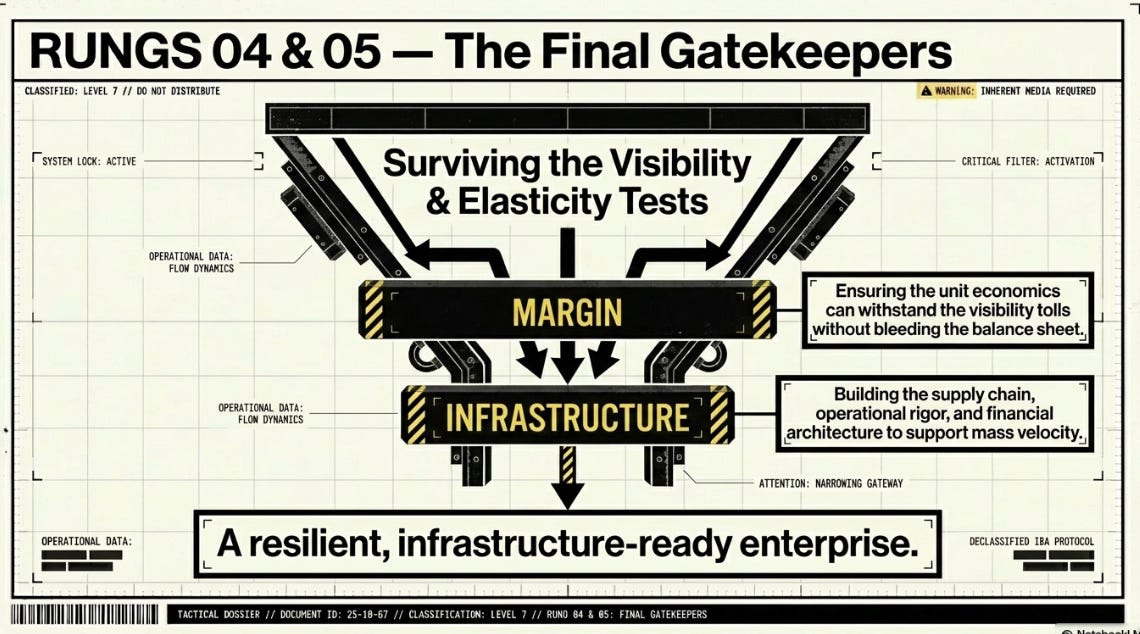
If you're going big, now you have a lot of other things to think about.
For years, I talked to clients, read their briefs, wrote the agency version, my agency booked the media, and we ran the campaigns.
By the time a client reached us, they’d usually poured the concrete, signed the slotting deals, and bet the farm on a launch nobody had proven anyone wanted.
They came to buy attention, and we sold it.
Good attention.
Some of those brands are gone now, because attention was never the thing they really needed.
If I’d known then what’s in this guide, we wouldn’t have started with the ad.
I’d have started with the questions the ad can’t answer.
I’d have asked to see the repeat rate before I opened the media plan.
If the product cannot earn a second purchase on its own, I’d have told them to fix that before spending a dollar chasing the first.
I’d have asked what they’d already made irreversible: the factory, the lease, the inventory, the payroll.
Every one of those was a bet that the campaign would work, and a campaign alone can’t carry that huge a bet.
I’d have asked them whether they were niche or mass and what direction they were heading.
If they had pricing like the first and spending like the second, the gap between those two is where the money gets wasted.
I’d have told them the thing I was paid not to say: the ad should be the last thing you buy, not the first.
If the product can’t sell itself in one store with no help, no ad or media plan will save it; it’ll just help you lose faster.
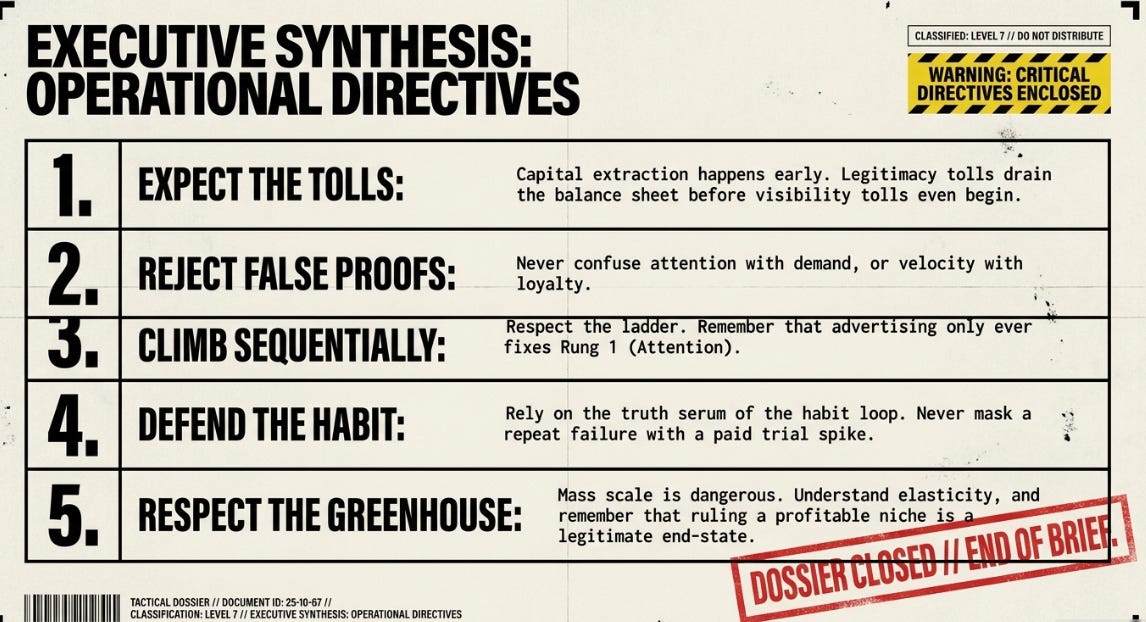
So that’s what I’d tell you now, before you make the sauce.
Don’t hire an agency yet.
Earn the second purchase.
Keep your costs reversible until the demand is undeniable.
Decide whether you’re niche or mass from the start- don’t expect the flip to be automatic.
The name, the packaging, and the product idea have to do the work of a media budget.
They have to be magnetic, charismatic, and create an aura big enough to attract a legion of fans.
Fans that you keep engaged, encourage to participate, and earn their loyalty, where the next new exciting novelty is just a shelf away.
Fans that are part of your own first-party dataset.
If the product doesn’t have something interesting about it, no campaign will fix or fake it.
If you do that, and when you finally spend, you’ll be spending from strength, pouring fuel on a fire that’s already lit.
Get it wrong, and you become one more line of revenue on someone else’s books and extracted toll.
Get it right, and you have a chance of being one of the 15% that make it through the gauntlet.
In summary…